Jed Berk · Transitional Species

Belugas' Sphere

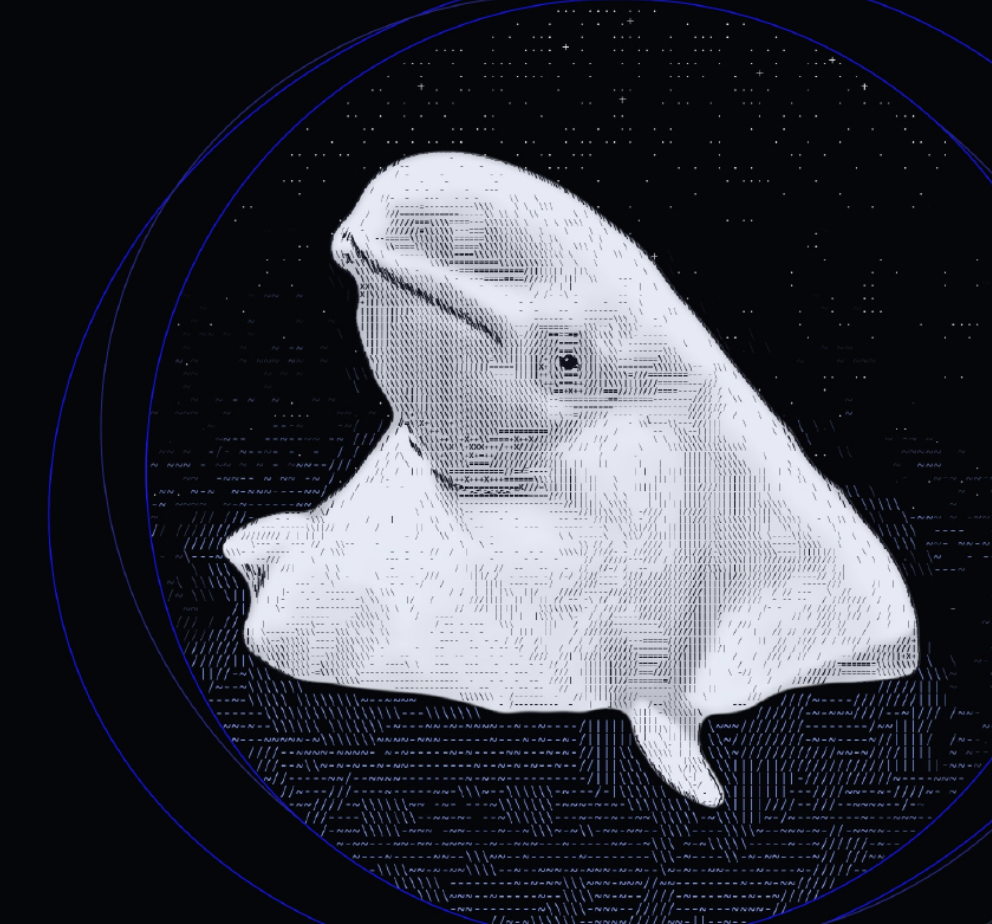
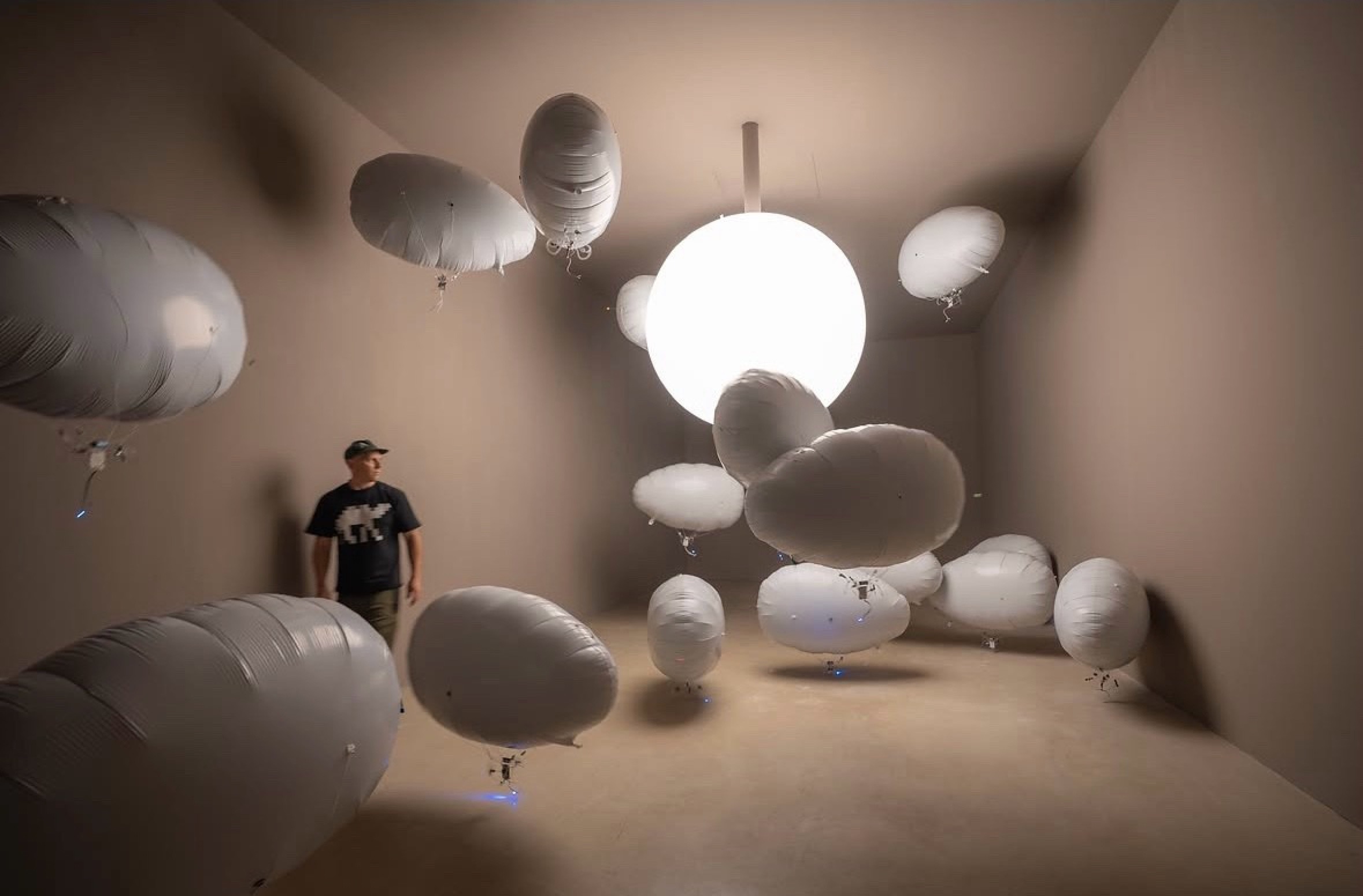
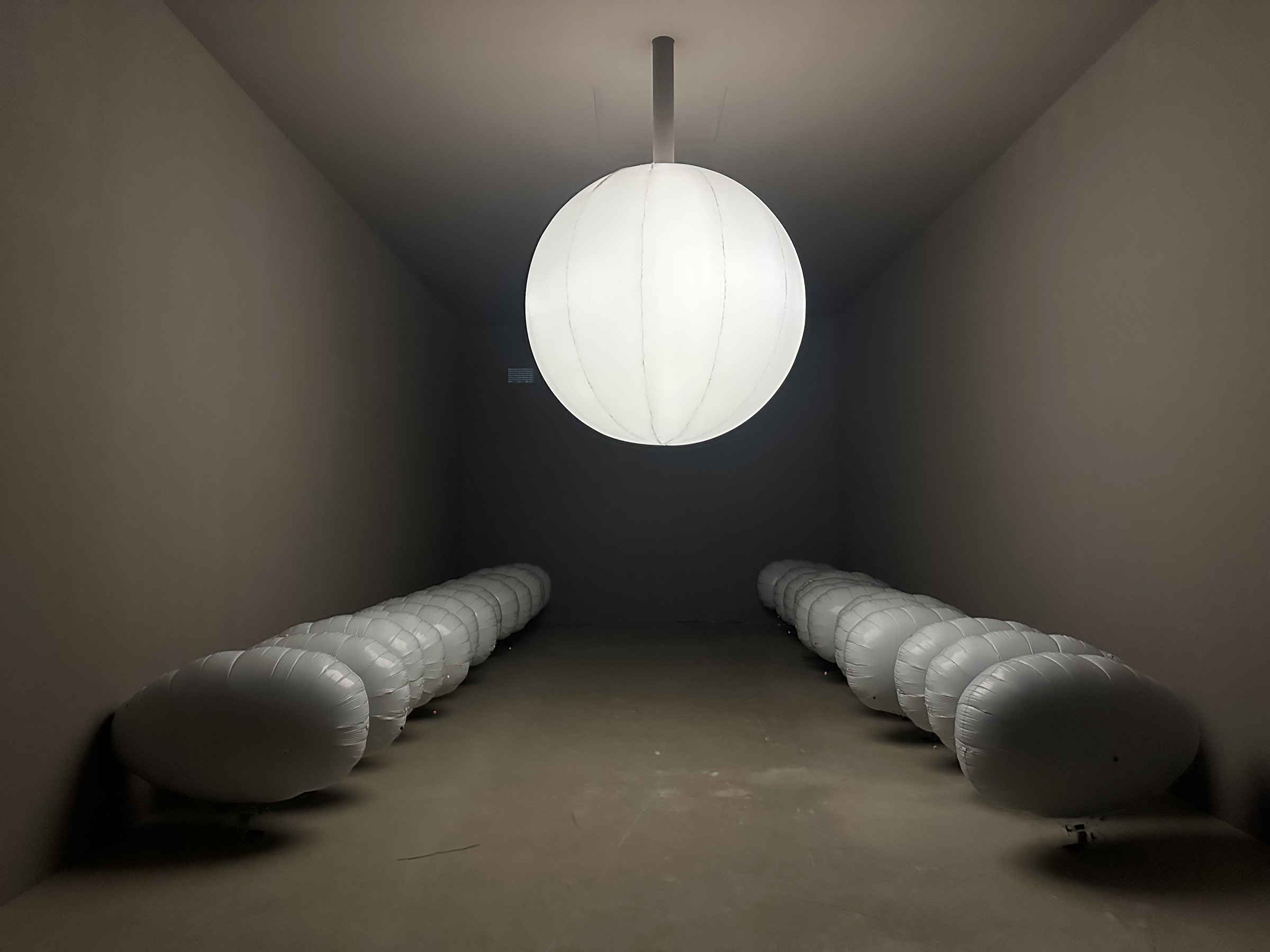
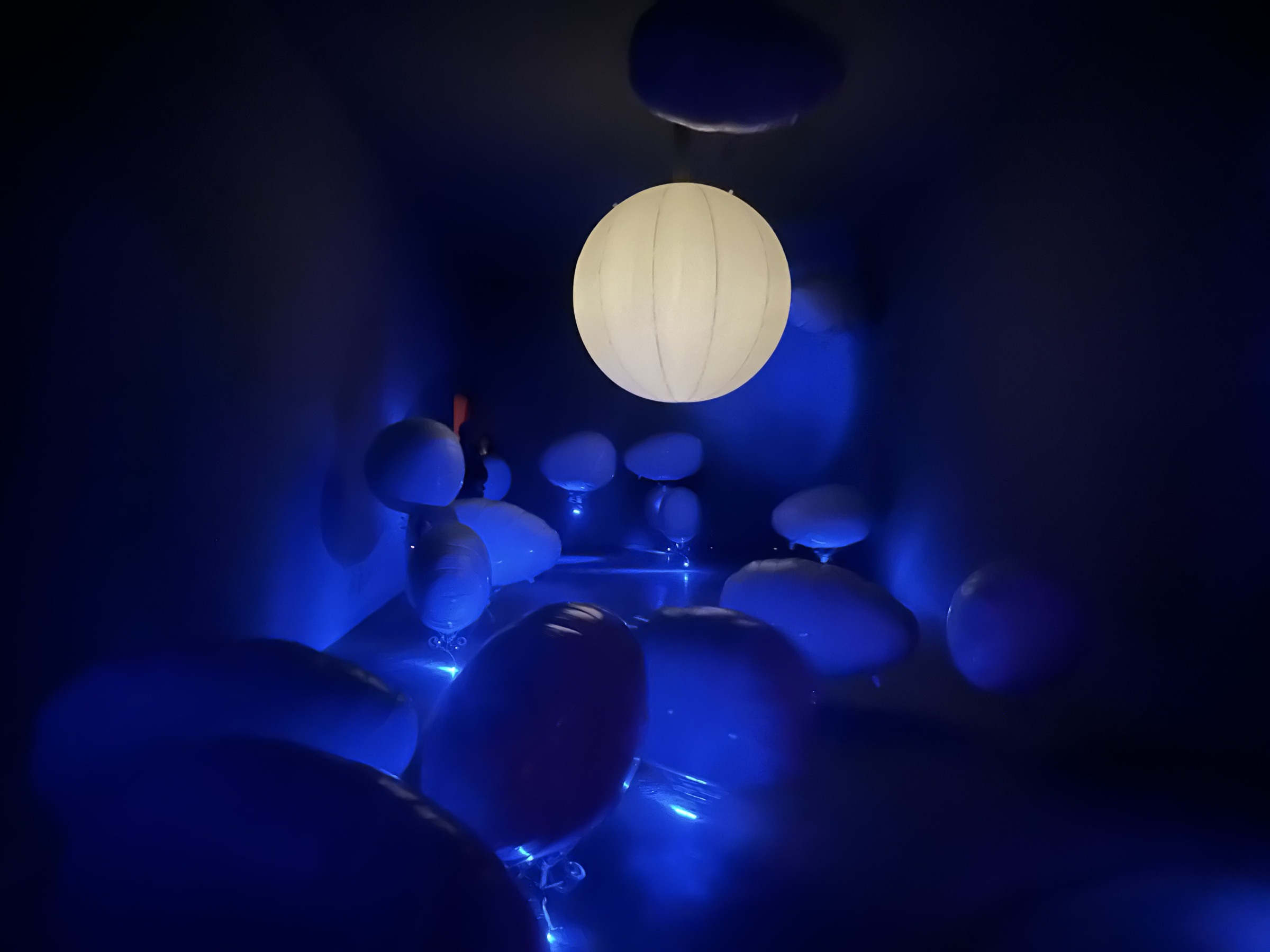
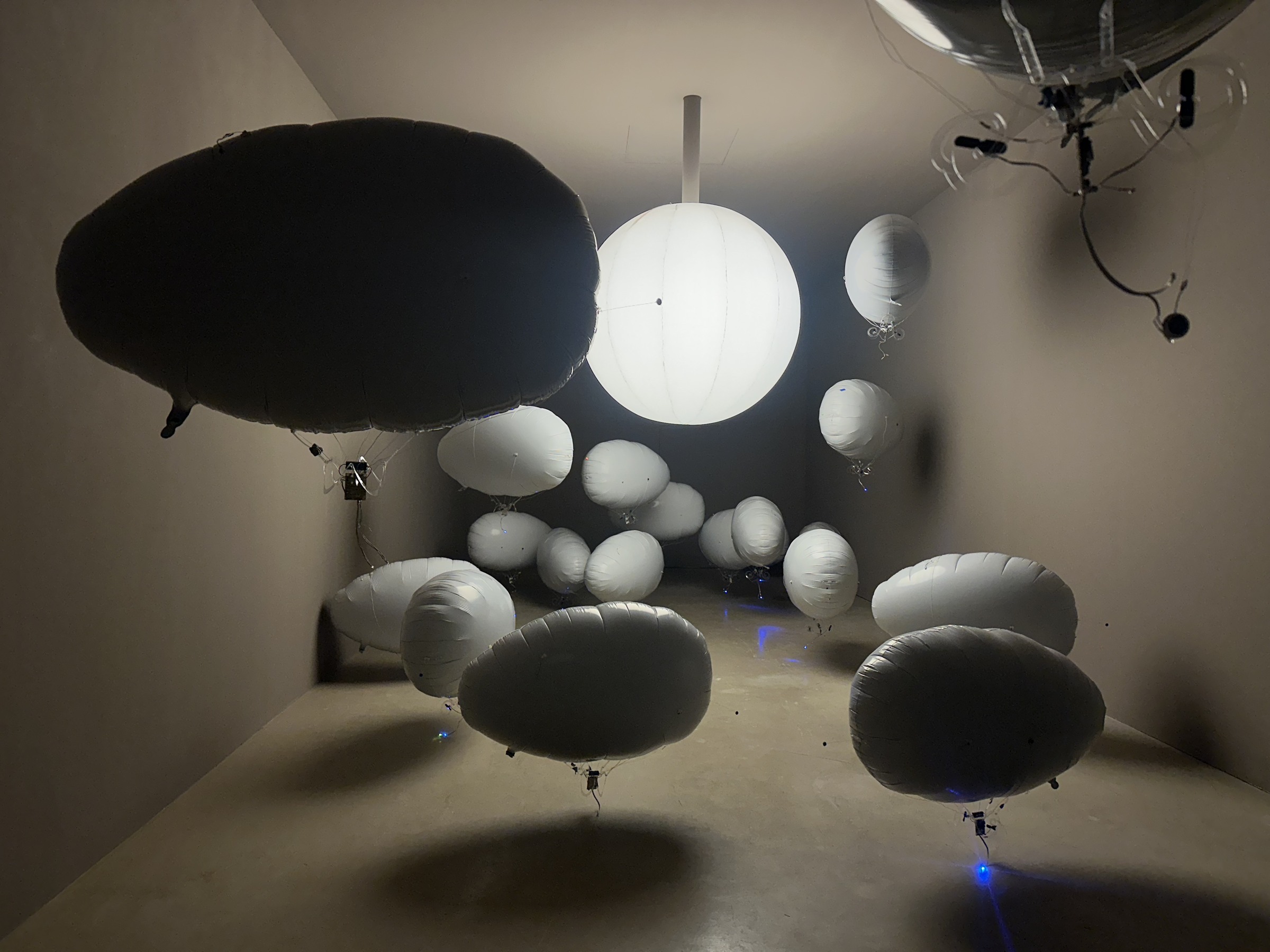
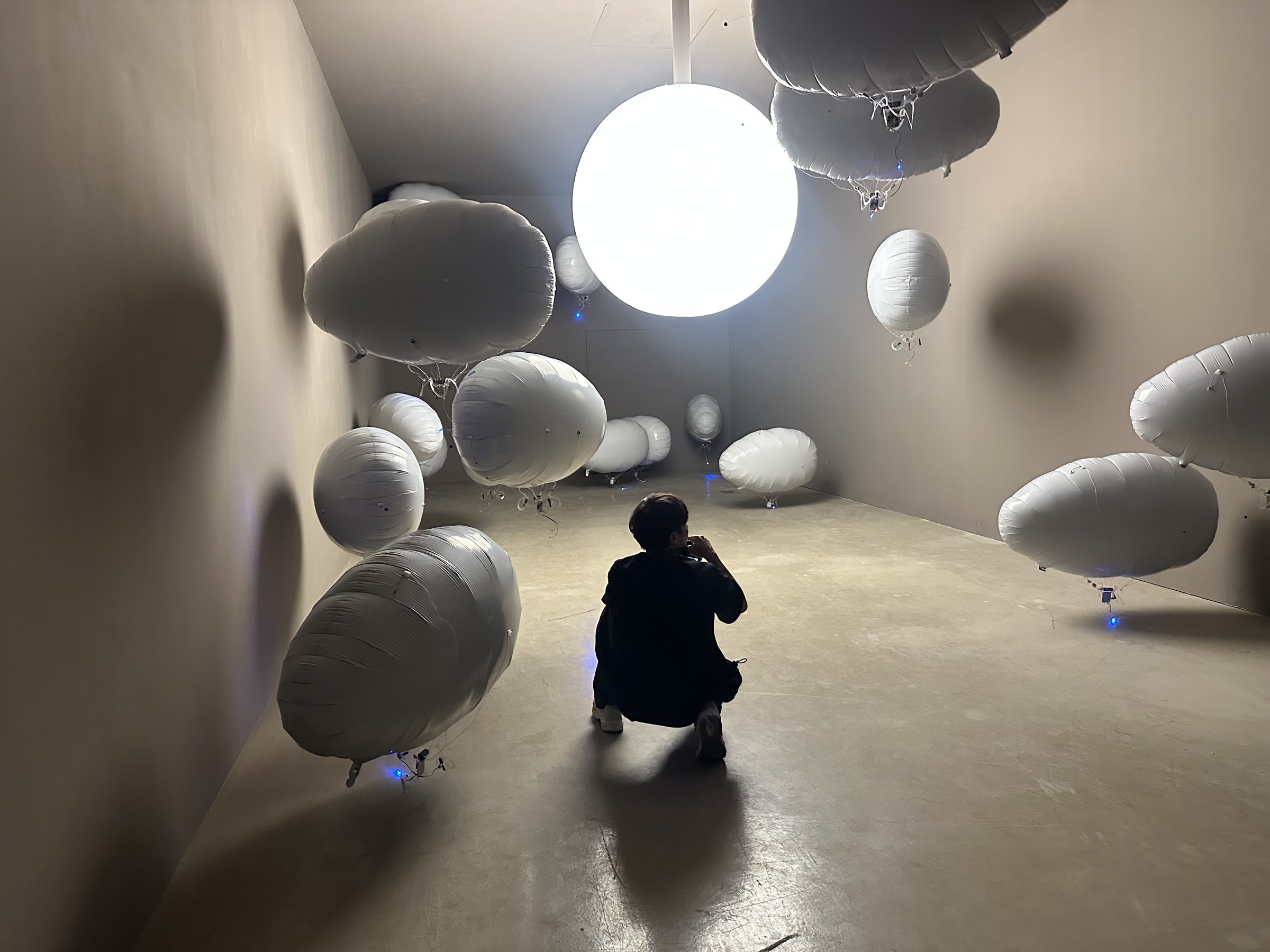
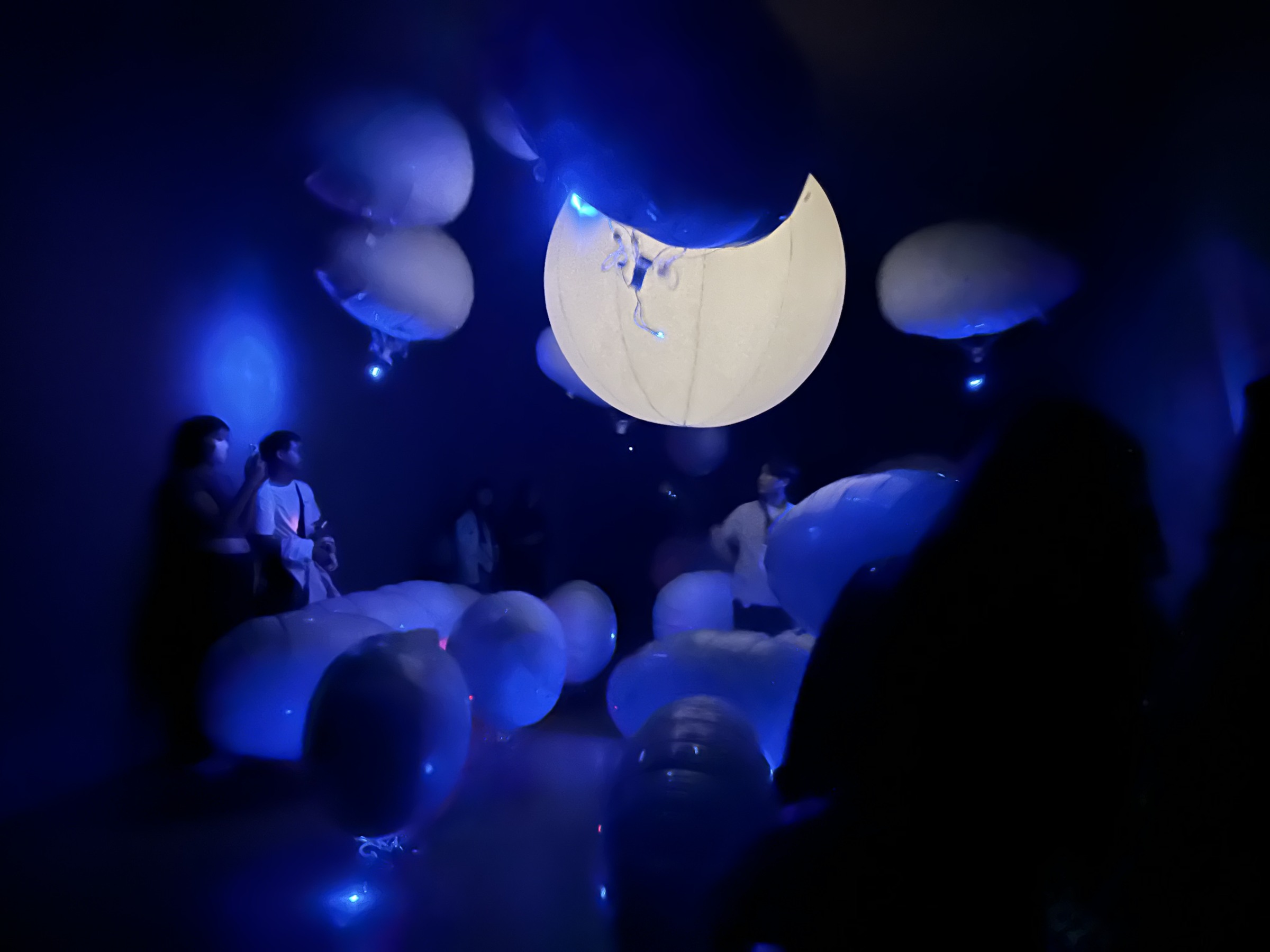
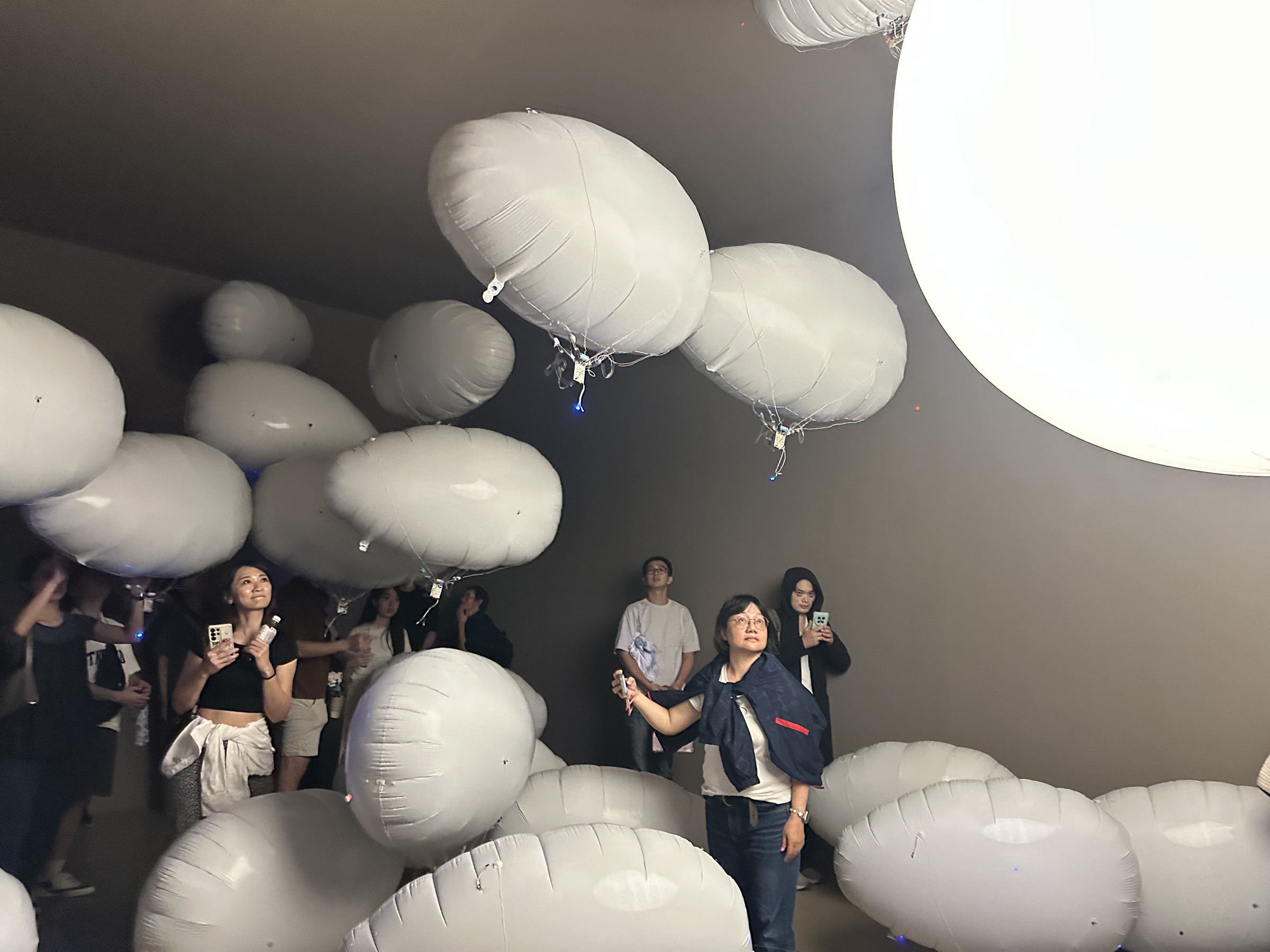
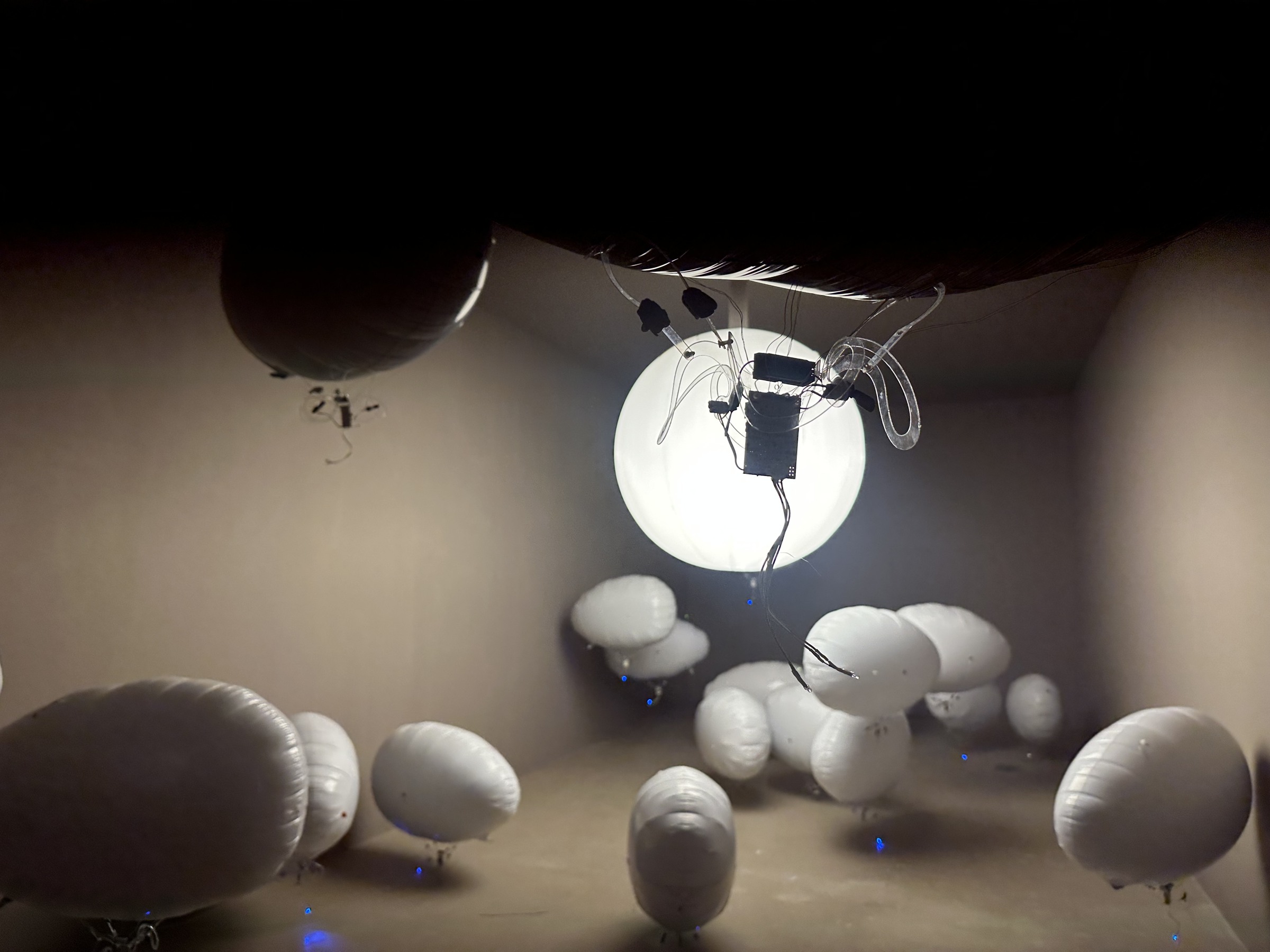
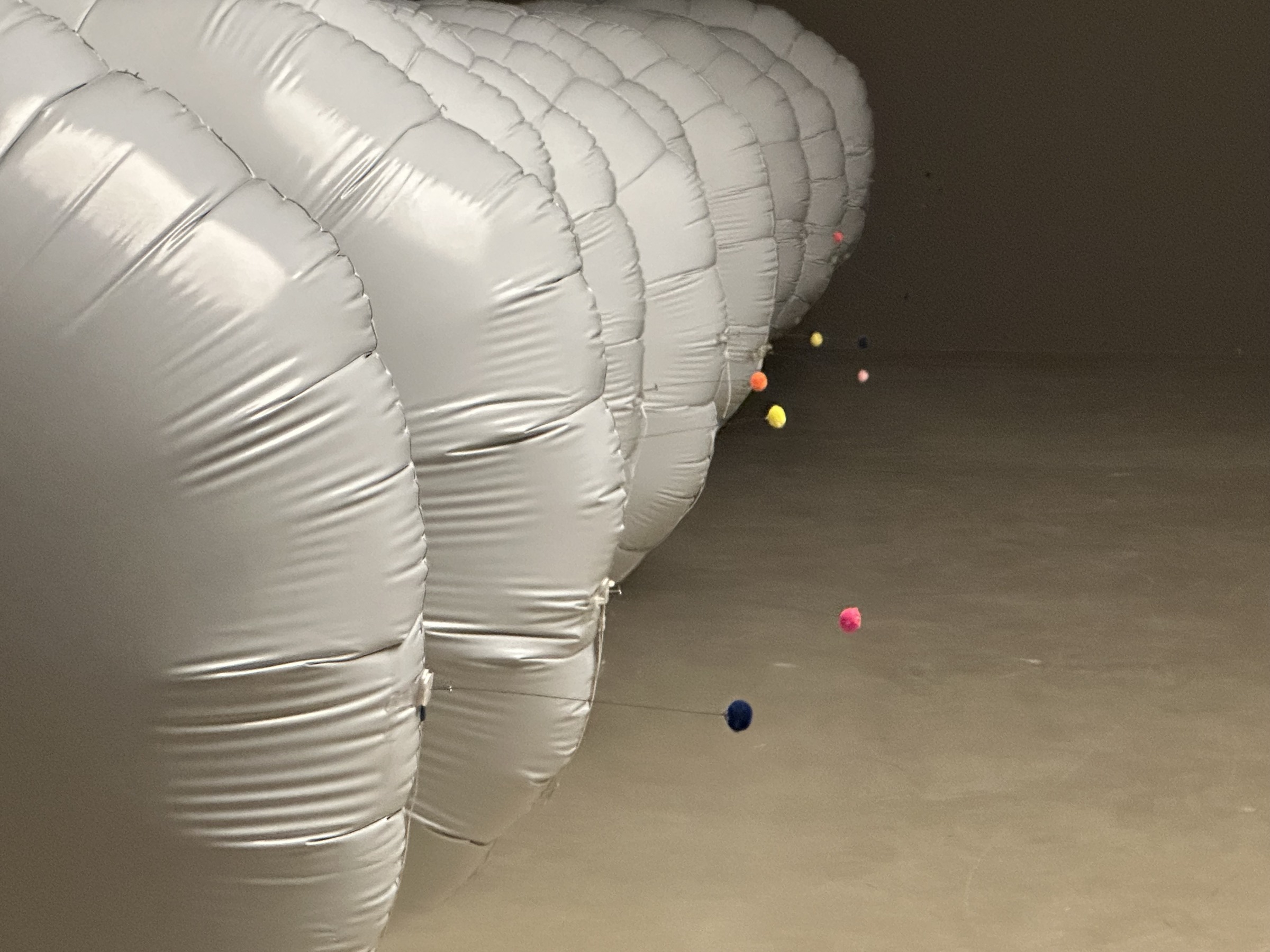
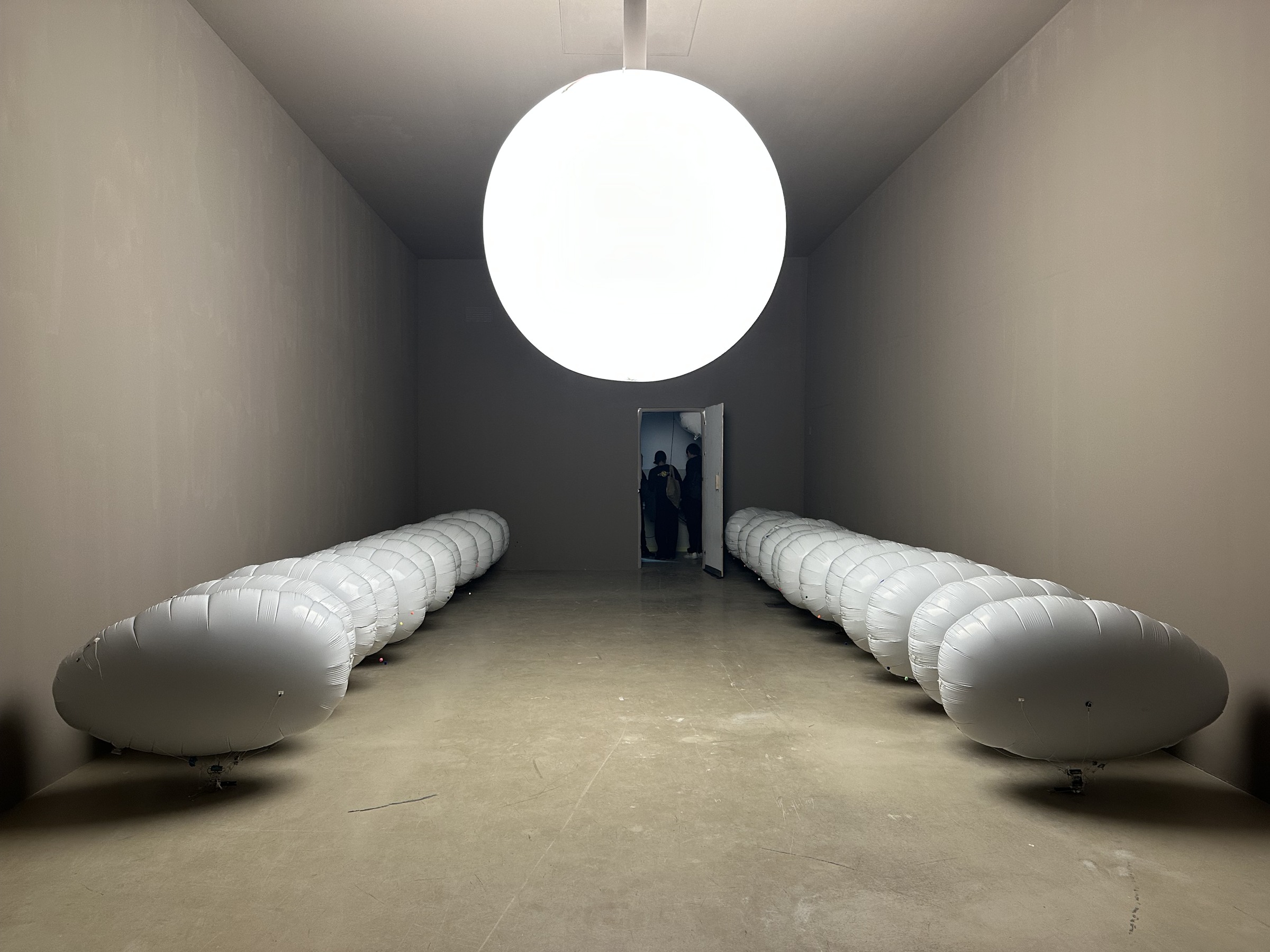
Belugas' Sphere is an immersive installation: a swarm constellation of autonomous Belugas seeking the light. Each Beluga senses and responds to light through its own movement, creating a constantly changing environment shaped by light and human interaction.

Index
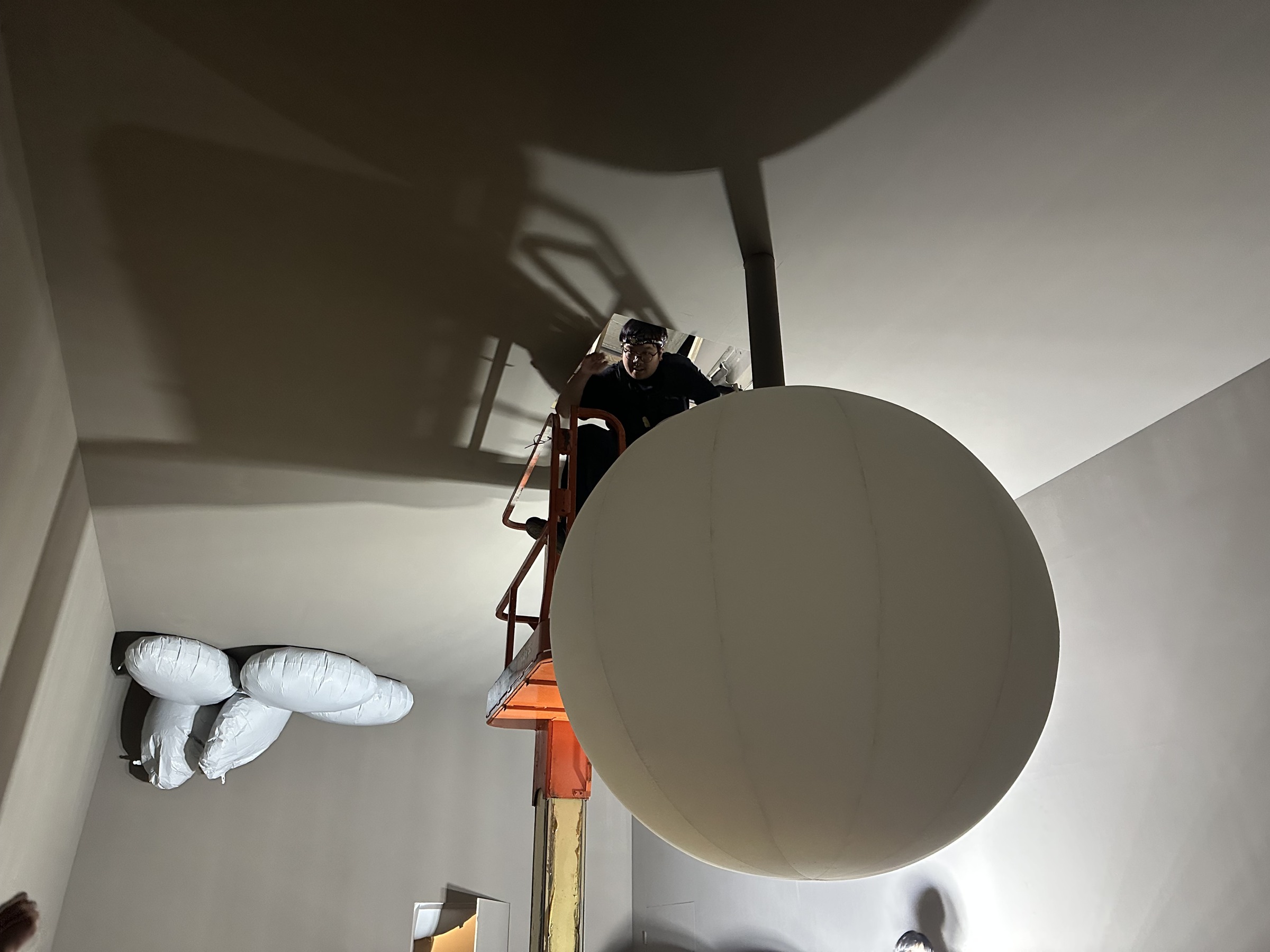
A person stands among floating Belugas beneath the glowing central sphere.
Belugas’ Sphere · Taipei, 2026

Explore the archive

  1. 2007

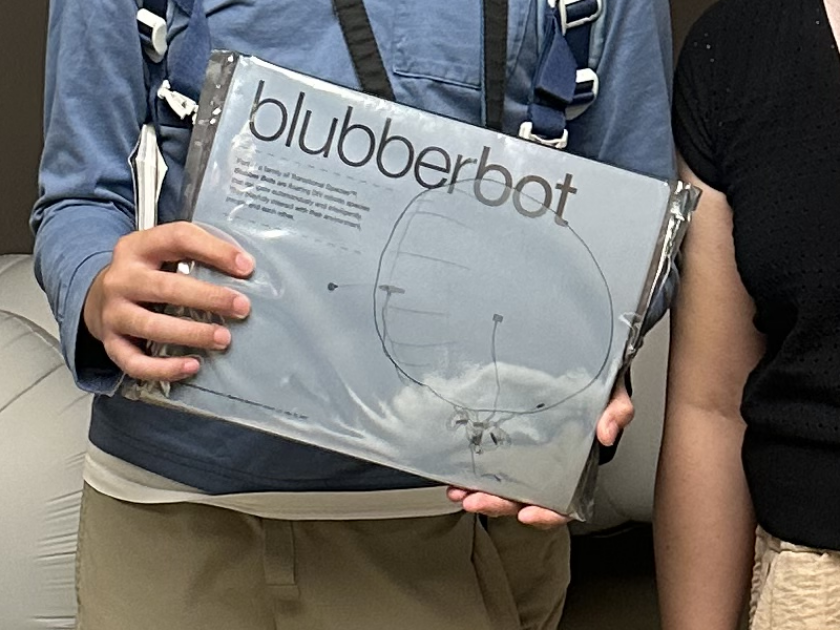
    Blubber Bots

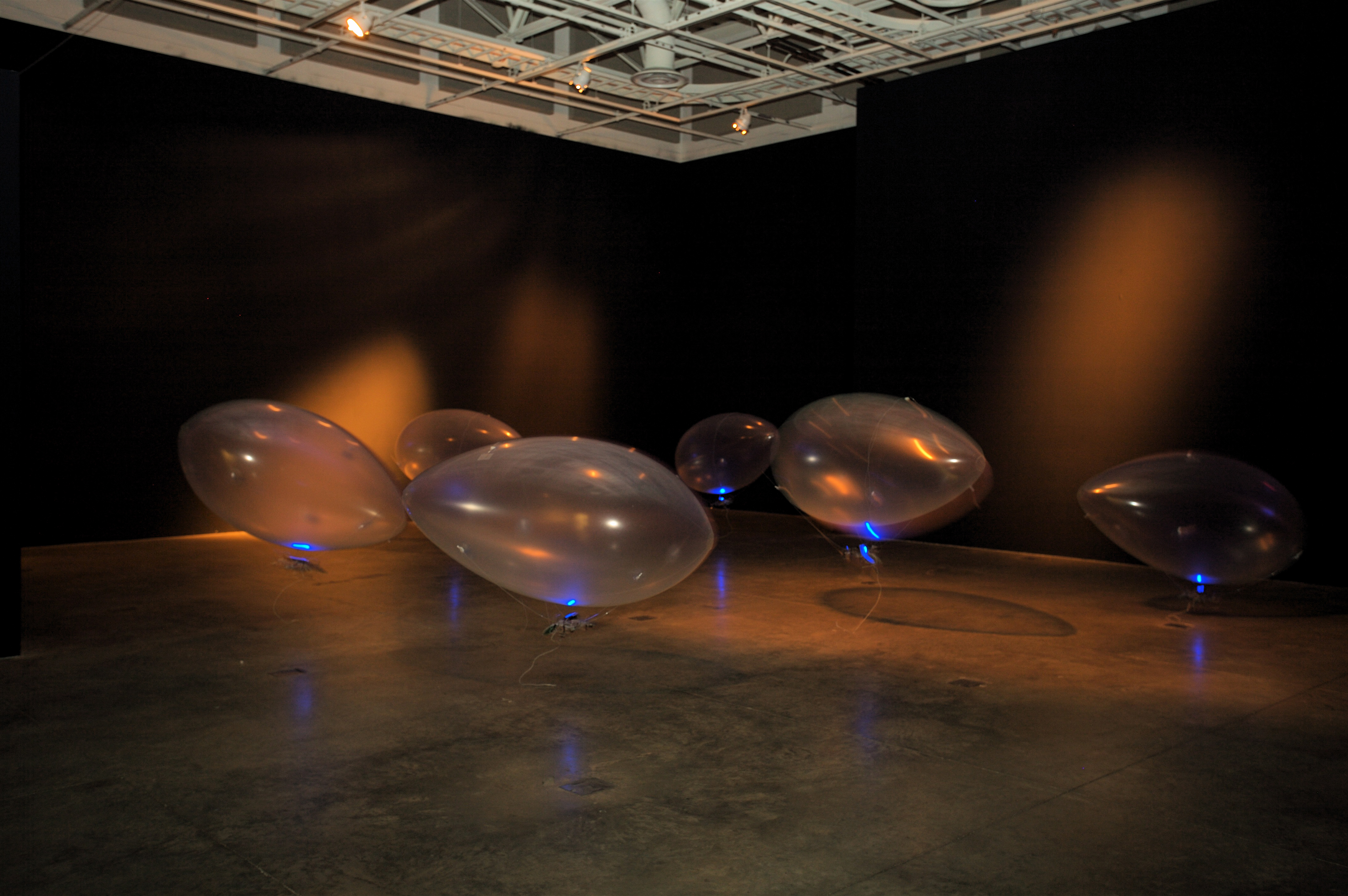
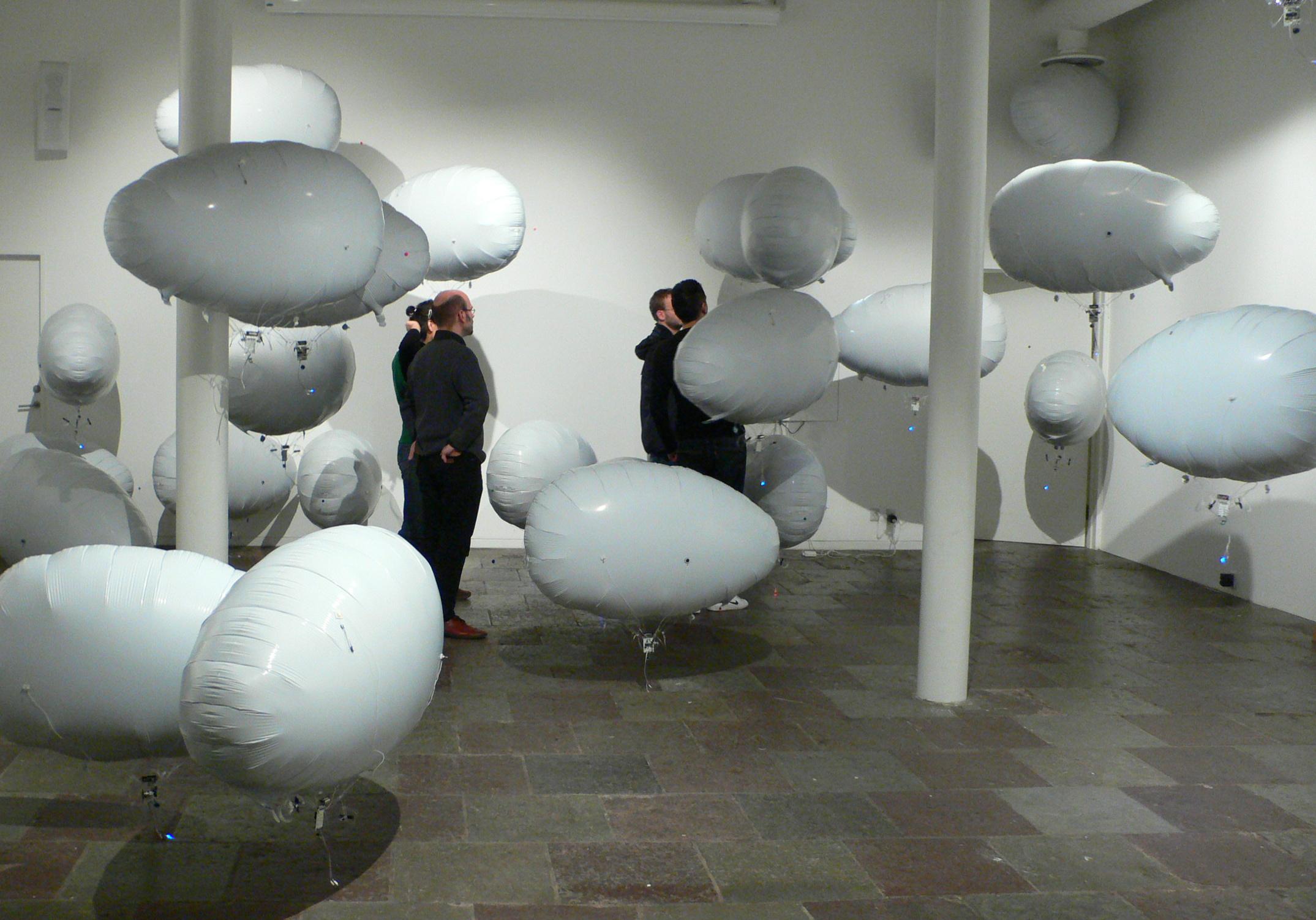
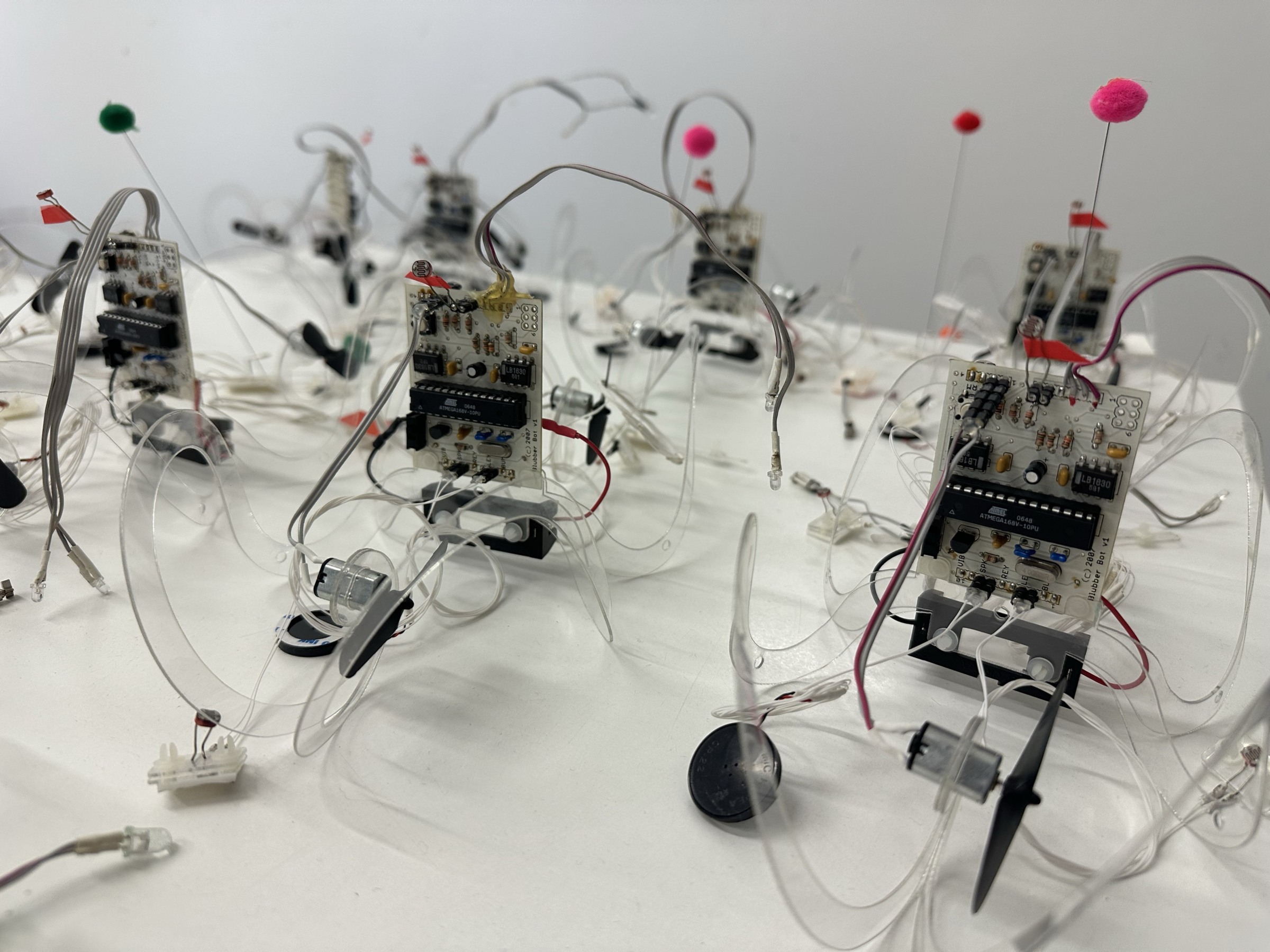
    Light-seeking DIY helium blimps — robotic inflatables that flocked, sang, and lived among people. About 700 were built by people around the world. Beluga Pod at Brandts, Odense (2008) gathered 35 into one orchestrated swarm visitors walked into. Blubber Bots were the offspring of the ALAVs (Autonomous Light Air Vessels), first developed in 2006 and refined as ALAVs 2.0 in 2007, which were networked and communicating. The Blubber Bots sought light with no communication. Belugas inherit both instincts: connect and seek light.

  2. 2026

    Belugas' Sphere

    At the Taipei Digital Art Festival, “Gray Autonomous Entity”. The pod returns to the room — helium inflatables floating around you — and looks nineteen years ahead toward Beluga Dyson.

    Belugas’ Sphere · Installation film

    The room over time, as the light changes and visitors move among the Belugas.

    Simulation 01 · The installation

    Belugas’ Sphere · The room

    Explore the space, light and individual behaviors behind the installation. The exhibition-to-orbit view opens a passage from the room to the imagined solar swarm.

    Opens in a larger viewer on your phone. Turn your phone sideways for more room to explore.

    The presentation · Taipei, 2026

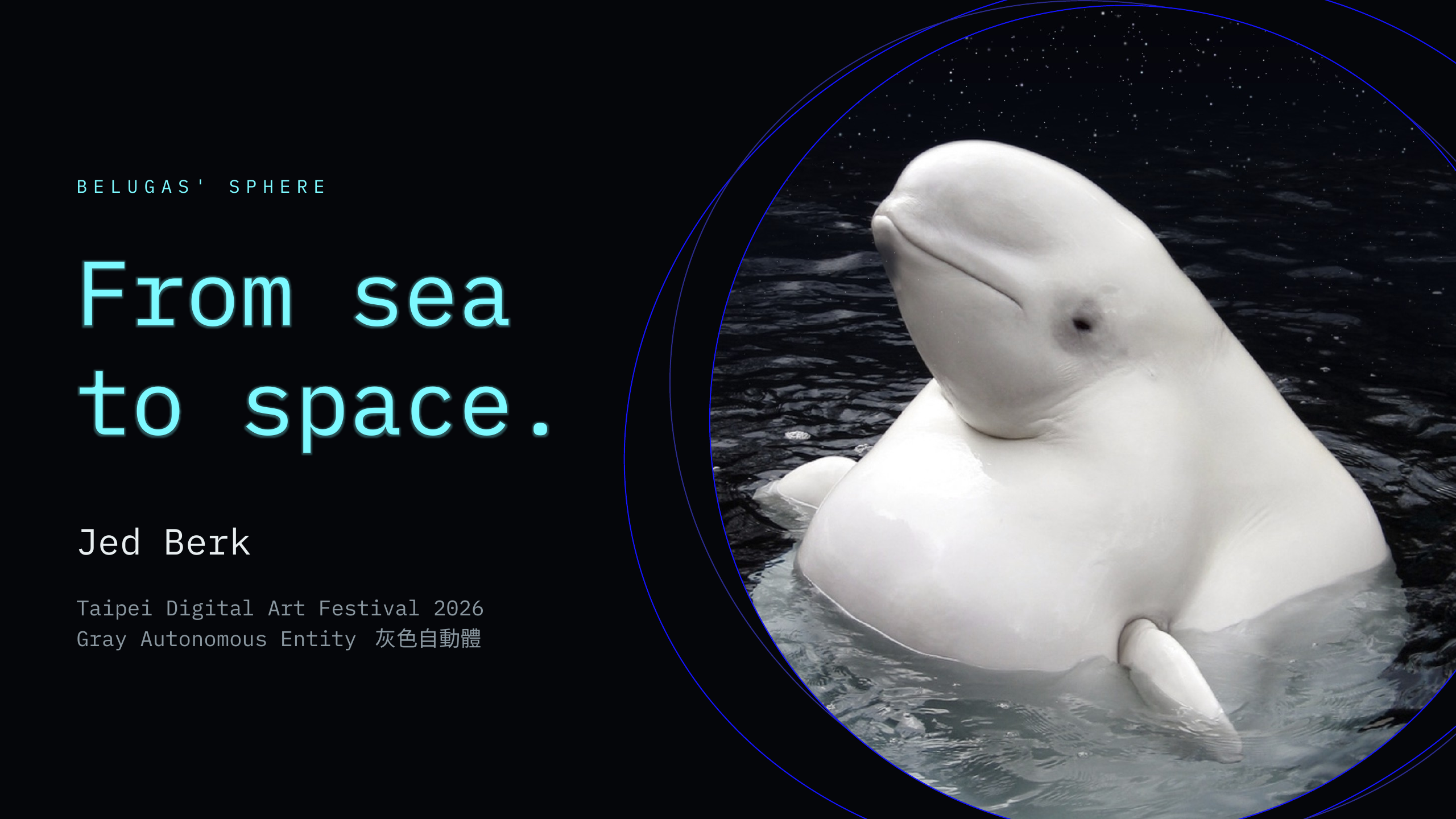
    From sea to space.

    Jed Berk’s presentation connects the installation in Taipei with the longer evolution of the Belugas and the imagined Beluga Dyson future. Browse the slides, then watch the accompanying film.

    Presentation slide 1 of 10: From sea to space
    Slide 1 / 10
    Sphere to Dyson · presentation film

    Created for the November 1, 2026 presentation, with Traditional Chinese subtitles.

  3. 2045

    Beluga Dyson

    Simulation 02 · The solar journey

    Beluga Dyson · Moon to Sun

    Moon to Sun traces a speculative path from the light-seeking robots in the Taipei installation to an autonomous swarm around the Sun. The simulation follows the Belugas from lunar manufacturing and launch into solar orbit, where they operate as solar-powered compute nodes and transmit their results back to Earth.

    Beluga guide

    In Taipei, I followed a light in a room. Now, imagine me built on the Moon. Once we reach solar orbit, we use sunlight to power our computers. Each of us does a little of the work, and together we send what we learn back to Earth.

    Beluga Dyson · a swarm around the Sun · concept

    Moon launch → Solar swarm → Knowledge comes home

    Launch Moon to Sun in portrait or landscape. Tap ••• for viewer options. You can also watch the presentation film.

    Beyond the swarm · A possible evolution

    Toward a nested intelligence

    The Belugas turn sunlight into computation and send knowledge home. Intelligence emerges through the coordination of millions of individual Belugas, each contributing to a larger whole. Over time, the swarm could evolve into a nested intelligence—a speculative Matrioshka brain.

    The shell study below explores the geometry of that possibility. In the sparse model, Belugas at three orbital distances receive sunlight directly. A later Matrioshka brain imagines nested layers of computation, with outer layers using energy released as heat by inner ones.

    Explore rings and shells in 3D

    Watch the rings open into shells and shift into the speculative 2045 view. Drag or use the controls to take over.

    The shells are a conceptual model shown without scale, and the 2045 view is speculative.

    Model notes · orbital distances, energy and heat

    Outer shell, 1.0 AU. The model uses this radius as its baseline. At 1× sunlight, each Beluga generates about 270 W of electricity with 1 m² of solar cells at 20% efficiency. The estimated temperature is 315 K and depends on how much radiation the surface absorbs and emits. One orbit takes a year.

    Middle shell, 0.82 AU. At approximately √(2/3) AU, sunlight is 1.5× the baseline. With the same solar cells, each Beluga generates about 410 W. The estimated temperature is 350 K and one orbit takes about 270 days.

    Inner shell, 0.58 AU. At approximately √(1/3) AU, sunlight is 3× the baseline. With the same solar cells, each Beluga generates about 820 W. The estimated temperature is 415 K and one orbit takes about 160 days.

    Solar flux follows 1/r² and orbital period scales as r^1.5, where r is the orbital radius. The seed model assumes the Belugas are spaced far enough apart for every shell to receive direct sunlight. Denser shells could shade one another.

    In the proposed Matrioshka brain, outer shells could use waste heat once inner shells grow dense enough to block direct sunlight.

Work with Jed

Systems · collaborations

Systems collaboration and funding

I’m seeking technical collaborators and funding partners to develop the next phase of Beluga Dyson through research, engineering and working prototypes.

I welcome conversations with researchers, engineers, startups and funding partners interested in robotics, autonomous systems and space.

The project explores machines that gather energy, make other machines and share what they learn—from installations on Earth to an evolving artwork around the Sun. It asks how these machines could improve what they build and how they work, expanding what becomes possible and what can be shared.

The research may also lead to robotics technologies, products and commercial partnerships. An autonomous artwork at orbital scale is, of course, my idea of a practical application.

Precedents: Caltech MAPLE (power beamed in space, 2023) · MIT TESSERAE (self-assembling space tiles) · NASA Starling (CubeSat swarm autonomy)

Talk to Agent Ray ↗

Art · institutions

Institutional inquiries

Belugas’ Sphere and the wider Transitional Species body of work explore how people and autonomous machines share an environment. Through sculpture, movement, sound and collective behavior, each installation brings these relationships into public experience.

I welcome conversations with curators, museums, cultural centers, foundations and commissioning organizations interested in supporting new installations, exhibitions and public presentations. These partnerships can help the work grow into new places, forms and scales.

Talk to Agent Ray ↗

A human handoff

Send Jed a message about collaboration, funding or an exhibition.

Messages are delivered through FormSubmit.